Important elements of a complex website on the internet

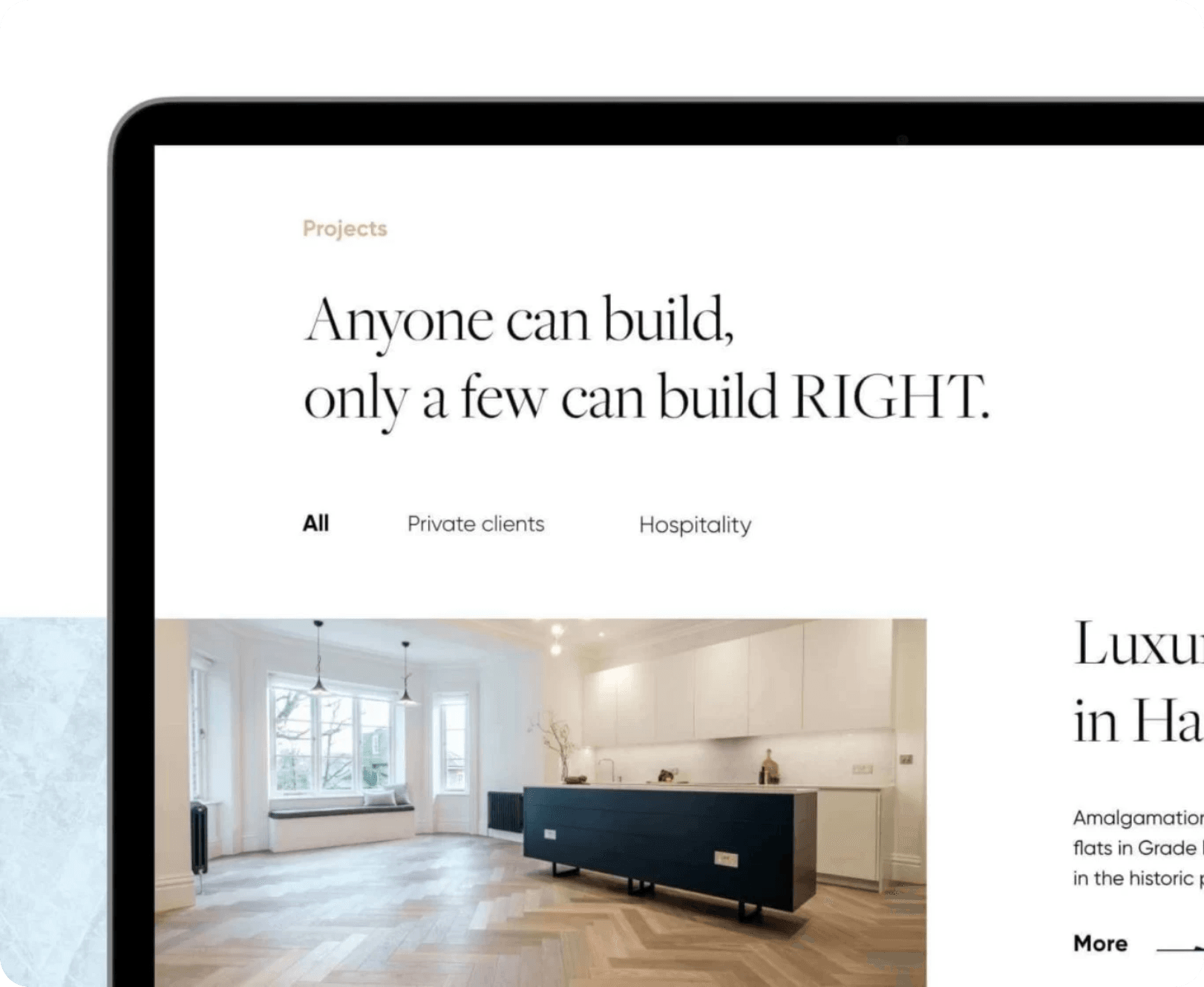
Complex websites are characterised by a number of elements that require particular attention during the design phase. Numerous subpages, the user journey and language versions are just a few of the key issues that have a huge impact on the final product. In this article, you will find the elements that are important to us when developing a complex website.
Types of content
Users visit your website to find the information they need. For this reason, content is one of the most important elements of the site. Depending on the type of text, you need to divide it into several categories, which will determine the style and placement of the content on the site. Bear in mind, however, that the types of content will also depend on the specifics of your project.
Content for the product page
In e-commerce, the content on product pages is a key consideration. An engaging product description can have a positive impact on conversion rates in your shop. However, remember to consider the entire user journey. You’ll also need to prepare content for every stage of the shopping basket process. Don’t forget to include compelling messages about other customers’ reviews and product specifications.
Blog posts
When it comes to building a website, the structure of the blog post editor is also an important consideration. It usually consists of an H1 heading, an introduction (known as the ‘lead’), H2 headings and paragraphs. Other elements of blog content include the meta description and the snippet, which users will see in the list view of all articles.
Landing page content
A landing page is a specific web page, which is designed usually to meet the needs of campaigns or occasional promotional campaigns. An important consideration when creating content for this type of subpage is to take into account specific sections. Usually on landing pages there is a contact form, a gallery photo gallery, or a video and sections with bulleted lists outlining the benefits of the offer. An important consideration when creating them is the visual focus attention of the audience.
Front-end and back-end of the website
The front-end is the layer of a website that is visible to the user. When designing a complex website, this is the aspect that must be prioritised. A developer can employ solutions and technologies that may prove useful in the future and facilitate potential expansion of the website. For example, if changes to colour or font are required after implementation, it is preferable that these changes do not involve modifying the entire code.
In addition the photos, shown on the website should be optimised in such a way, so as not to increase the time it takes for the website to load. The optimal file size of the content is 200 kMB.
As for the back-end, this is the layer which is not visible. First and forest all, it should be well thought out. It is worth for the programmer choose a framework that meets the expectations of the product and is helpful during the implementation phase.
Good planning and documenting individual paths is the best solution.
Content management
A content management system (CMS) is important from the perspective of a brand representative. It enables customers to make simple changes to the website themselves, without the need for a programmer’s involvement.
However, slow page loading times, caused by a CMS panel that is too ‘heavy’, will not have a positive impact on the website’s search engine ranking. Remember that performance is just as important as convenience.
Language versions
If the final product is also intended for customers abroad, the various language versions of the website will also be an important feature. In this case, when designing the back-end layer, it is worth ensuring that editors can translate the content.
WCAG
Is your product intended for people with disabilities or older people ? Consider the WCAG, that is adapting the website to these target groups. Thanks to WCAG, your website will benefit from greater clarity for people with impairments to their sight, hearing or mobility impairments.
The elements of a complex website described in this article are not the only considerations when creating a website. Each project must be approached on a case-by-case basis, with solutions tailored to the specific client. Do you need advice on this matter? We’d be happy to answer your questions.